Key Takeaways:
- Soft shackles eliminate the deadly projectile risk that makes steel D-rings dangerous in kinetic recovery operations
- High-quality soft shackles often exceed 30,000 lbs breaking strength while weighing 80% less than equivalent D-rings
- The flexible UHMWPE construction allows soft shackles to connect to irregular recovery points that rigid D-rings simply can’t reach
- Critical safety mistakes with both types of hardware kill people—but only D-rings become deadly missiles when they fail

Every offroader faces the same critical decision when building their recovery kit: soft shackles or traditional steel D-rings? The wrong choice doesn’t just mean a failed recovery—it can mean serious injury or death. While both options serve as connection points between recovery gear and vehicles, the differences in safety, performance, and versatility make this decision more crucial than most realize.
Why Steel D-Rings Can Kill
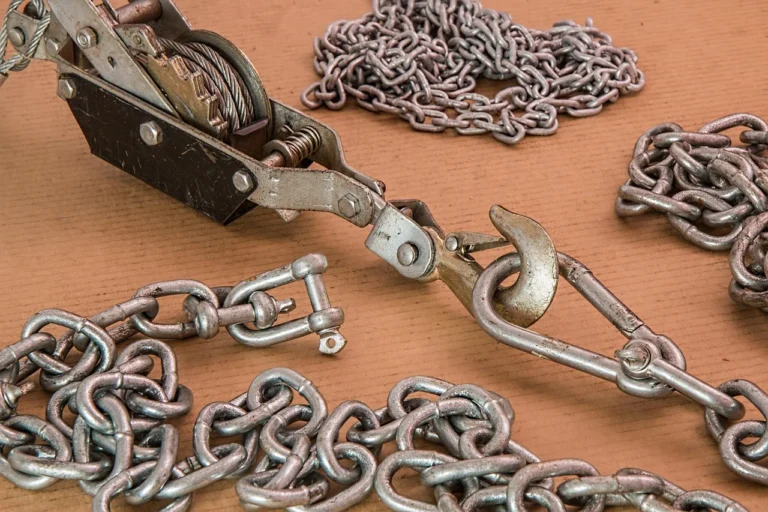
Steel D-rings transform into deadly projectiles when they fail under the massive forces of kinetic recovery. Unlike the controlled environment of a workshop crane, offroad recovery involves sudden shock loads that can exceed three times the static weight being pulled. When that 4-pound steel shackle snaps under 20,000+ pounds of force, it becomes a high-velocity missile capable of shattering windshields, crushing bones, or worse.
The physics are unforgiving. Steel fails through sudden brittle fracture, releasing all stored energy instantaneously. Documented cases show metal hardware becoming projectiles during recovery operations, illustrating the real-world danger that metal components pose in dynamic situations. This isn’t theoretical—it’s a documented hazard that has injured and killed people.
The problem compounds when considering how D-rings concentrate stress. Their rigid construction creates stress risers that transfer the full shock load directly to the weakest point—usually the pin or the junction where the bow meets the base. When failure occurs, there’s no energy absorption, no controlled release, just explosive separation that launches metal fragments at lethal velocities.
How Soft Shackles Significantly Reduce Projectile Risk
The Science Behind UHMWPE Fiber Failure
Ultra-High Molecular Weight Polyethylene (UHMWPE) fibers fundamentally change how recovery hardware fails. Instead of explosive fracture, UHMWPE experiences progressive fiber separation—a controlled unraveling that dissipates energy over time rather than releasing it instantaneously. This material property eliminates the projectile hazard entirely, as there’s no rigid mass to become airborne.
The fiber structure acts like thousands of microscopic shock absorbers working in parallel. When overloaded, individual fibers stretch and break sequentially, each failure absorbing a small portion of the total energy. This progressive failure mode means the shackle “fails softly,” maintaining partial strength even as it approaches complete failure, giving operators warning signs rather than catastrophic release. When a soft shackle does fail completely, the synthetic fibers simply fall to the ground rather than becoming dangerous projectiles.
Real-World Safety Evidence
Professional recovery operations have documented the safety advantages repeatedly. Third-party certification through organizations like SGS provides independent verification of breaking strength claims, ensuring that safety ratings represent real-world performance rather than marketing promises alone. This certification process gives operators engineering confidence that marketing claims cannot deliver.
Field reports consistently show that when soft shackles do fail, operators describe the failure as “gradual” and “visible,” with no dangerous debris or sudden shock. The synthetic construction means even a completely failed soft shackle poses no projectile threat, eliminating the search-and-dodge scenario that metal shrapnel creates.
Why Energy Absorption Matters in Recovery
Energy absorption extends beyond just failure modes. Soft shackles work synergistically with kinetic recovery straps, both systems designed to manage dynamic loads through controlled stretch and energy dissipation. This fiber-on-fiber compatibility reduces stress concentrations and protects the reinforced loops of recovery straps from the abrasive wear that steel D-rings inevitably cause.
The result is a recovery system where every component works together to manage shock loads rather than creating brittle failure points. Professional operators report longer strap life and more predictable recovery performance when using all-synthetic connection systems, as the components share loads more effectively than mixed metal-and-synthetic setups.
Strength Comparison: The Numbers Don’t Lie
Breaking Strength Ratings and Safety Factors Explained
High-quality soft shackles routinely achieve Minimum Breaking Strength (MBS) ratings exceeding 30,000 pounds, with premium versions reaching 45,000+ pounds. Steel D-rings show significant variation in strength ratings—while some 3/4-inch models rate around 22,000-34,000 pounds, others can achieve 60,000+ pounds. However, even high-strength steel D-rings maintain the inherent projectile risk that soft shackles eliminate entirely.
The safety factor calculation reveals the true advantage. For a 7,000-pound vehicle, industry best practice recommends a minimum 3:1 safety factor for kinetic recovery, requiring 21,000 pounds MBS. A 4:1 safety factor provides additional margin at 28,000+ pounds. Premium soft shackles provide 6:1 or higher safety factors, creating substantial reserve capacity for unexpected shock loads or degraded conditions.
These ratings aren’t marketing numbers—third-party certification through organizations like SGS provides independent verification of breaking strength claims. This testing standard ensures that advertised strengths represent real-world performance, not laboratory maximums under ideal conditions.
Weight-to-Strength Advantage
The weight difference is dramatic: soft shackles weigh approximately 1 pound compared to 4-5 pounds for equivalent steel D-rings. This 80% weight reduction matters enormously for overlanders managing payload capacity across thousands of miles. The lighter weight also means safer handling—a dropped soft shackle won’t break toes or dent vehicle panels.
Beyond static weight, the reduced mass eliminates inertial forces during transport. Loose D-rings can become hazardous inside vehicles during off-camber driving or sudden stops, as any heavy unsecured object poses risks. Soft shackles remain harmless even when unsecured, adding another layer of passive safety to expedition setups.
Practical Advantages for Offroading
1. Versatile Connection Points
Soft shackles conform to irregular shapes that defeat rigid D-rings entirely. The flexible construction allows direct connection to various recovery points, though users must ensure these points are rated for recovery loads and free of sharp edges that could damage the synthetic fibers. This versatility eliminates the need for multiple specialized hardware pieces, simplifying recovery kit requirements.
The ability to thread through tight spaces opens recovery options impossible with bulky metal hardware. Soft shackles can snake through wheel spokes, around trailer tongues, or through small openings in brush guards—connections that rigid shackles simply cannot make.
2. Quick Setup in Harsh Conditions
Environmental factors like mud, ice, and water can make D-ring pins challenging to align and remove, particularly when binding occurs after use. Soft shackles eliminate mechanical pins entirely, using simple loop-and-pass connections that work even with thick gloves or numb fingers. The single-piece construction means no small parts to drop in tall grass or deep water.
Time matters during recovery operations, especially in dangerous situations like rising water or unstable ground. Soft shackles connect in seconds without tools, while D-rings require careful pin alignment and threading—tasks that become exponentially harder under stress or in poor visibility.
3. Recovery Strap Protection
Steel D-rings create sharp-edged contact points that gradually cut synthetic strap fibers through repeated use. The rigid metal concentrates stress at specific points, creating premature wear patterns that compromise strap integrity over time. Professional operators report replacing steel-damaged straps far more frequently than those used exclusively with soft connections.
Soft shackles distribute loads across broader contact areas and eliminate abrasive metal-on-fiber contact. This compatibility extends strap service life significantly, making the higher initial cost of soft shackles economically beneficial over time through reduced replacement frequency.
4. Long-Term Durability Benefits with Proper Care
UHMWPE fibers resist corrosion, rust, and most chemical contamination that destroys steel hardware over time. Properly maintained soft shackles remain functional for years in harsh environments that would render steel D-rings unusable through corrosion or mechanical wear.
The durability extends to temperature stability and UV resistance, though prolonged exposure to direct sunlight can degrade UHMWPE fibers, necessitating UV protection during storage. Quality soft shackles maintain strength and flexibility across temperature ranges where steel hardware can become brittle or difficult to manipulate, though UHMWPE has specific temperature limits including a melting point of 145°C.
When D-Rings Still Make Sense
Static Applications vs Kinetic Recovery
Steel D-rings excel in static applications where their rigidity provides advantages over flexible connections. Cargo securement, stationary anchoring, and low-speed towing operations benefit from the precise positioning and mechanical advantage that rigid hardware provides. The key distinction is eliminating shock loads that create projectile hazards.
Winch operations represent a gray area where steel hardware may be appropriate, provided the loads remain steady and controlled. However, even winching benefits from soft connections when operating in confined spaces or around personnel, as the safety advantages outweigh any mechanical benefits of rigid hardware.
Fixed Vehicle Mount Points and Industrial Uses
Permanent mounting applications favor steel D-rings for their resistance to abrasion and cutting when mounted to vehicle recovery points. The rigid construction prevents sawing action against mounting hardware that could eventually compromise flexible connections. These applications typically involve known load directions and controlled operating conditions.
Industrial rigging applications with certified load ratings often require steel hardware to meet regulatory requirements. However, these controlled environments with trained operators and engineered lifting plans differ fundamentally from the unpredictable nature of vehicle recovery operations.
Critical Safety Mistakes That Kill
1. Using D-Rings in Kinetic Recovery
The most lethal mistake involves using steel D-rings in dynamic “snatch” recoveries where kinetic energy storage creates massive shock loads. These operations routinely generate forces exceeding three times static vehicle weight, turning even high-rated D-rings into potential projectiles. Professional recovery operators universally recommend against steel hardware in kinetic applications.
The temptation to use existing D-rings “just this once” has caused serious injuries and fatalities. No recovery situation justifies the projectile risk when safer alternatives exist. The convenience of grabbing nearby steel hardware never compensates for the permanent consequences of metallic failure.
2. Ignoring Load Rating Mismatches
Connecting high-strength recovery straps to low-rated connection hardware creates dangerous weak points that fail unpredictably. A 35,000-pound strap connected through 20,000-pound hardware will overload the connection point before reaching strap capacity, often without warning. This mismatch turns the weakest component into a failure bomb.
The math is unforgiving: recovery forces routinely exceed static vehicle weight by 200-300% during kinetic operations. A 7,000-pound vehicle requires connection hardware rated for minimum 21,000 pounds under shock loading, with 28,000+ pounds recommended for safety margin. Anything less creates predictable failure points.
3. Skipping Equipment Inspection
Failing to inspect hardware before each use kills people through preventable failures. Steel D-rings develop fatigue cracks, thread damage, and corrosion that compromise strength without obvious visual indicators. Soft shackles show wear through fiber fraying, UV damage, or contamination that requires immediate retirement.
The inspection protocol must be non-negotiable: steel hardware gets replaced at any sign of deformation, thread damage, or corrosion. Soft shackles get retired immediately when showing cut fibers, severe abrasion, or contamination that washing cannot remove. Equipment that passes visual inspection today may fail catastrophically tomorrow without proper ongoing assessment.
Soft Shackles Are the Clear Winner for Recovery Operations
The engineering evidence is overwhelming: soft shackles provide superior safety, comparable strength, and greater versatility for vehicle recovery operations. The elimination of projectile hazard alone justifies the transition from steel hardware, but the additional benefits of weight reduction, connection versatility, and equipment compatibility make the choice obvious.
Professional operators who prioritize safety have already made this transition, recognizing that no recovery scenario justifies the inherent risks of metallic hardware in dynamic applications. The technology exists to eliminate preventable injuries and fatalities—the only requirement is choosing to use it.
For offroaders serious about safety and performance, the question isn’t whether to switch to soft shackles, but why anyone would continue risking lives with obsolete steel hardware. The superior engineering, proven safety record, and practical advantages make soft shackles the only logical choice for responsible recovery operations.
Visit Sunferno to learn more about recovery gear that prioritizes your safety on every adventure.
Company: Sunferno City: Tiruchirappalli Address: Sunferno (OPC) Private Limited Website: https://sunferno.com >